Karan Thete builds the workPerth · ABN 21 729 039 895Try the example workflow consoleFour real builds and one demo you can inspect

FICTIONAL FIELD-SERVICE EXAMPLE
01 / PROBLEM
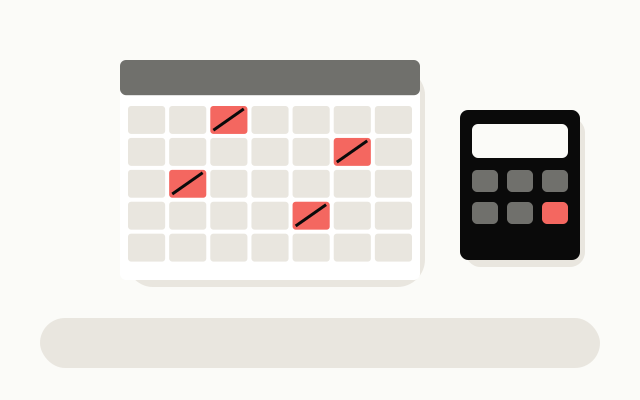
Quoted, chased, rebooked, re-typed. And it is only Tuesday.
The quote you meant to send. The job booked in a group chat. The spreadsheet only you understand. None of it is hard. All of it is yours, and it happens after hours.
02 / AGITATE
It is not one job. It is every week.
Put your own numbers into the calculator below. Then add the mistakes: the double booking, the invoice sent twice, the customer who asked the same question three times.
03 / AGITATE
You have tried the apps.
A CRM you stopped opening. A spreadsheet only you understand. Every new app was another place to check. None of it was built around how your week actually runs.
04 / SOLUTION
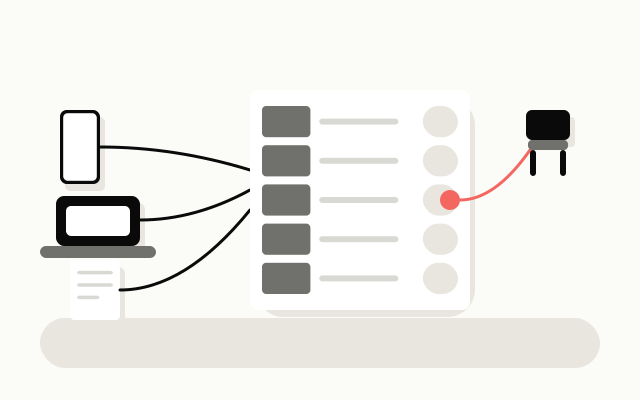
One tool, built around your jobs.
Every enquiry lands in one place with a name and a date. The next step is visible, and anything unusual stops for a person instead of disappearing.
05 / SHOW ME
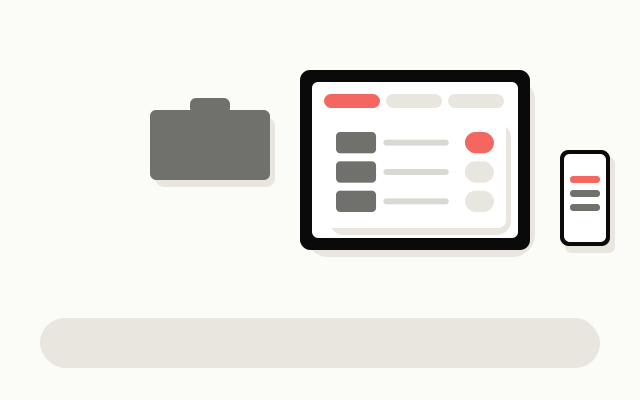
Here is what that can look like.
Try the example console. Your tool would be built around your jobs, your quoting and your calendar. Bring the real process and Karan will tell you whether it is worth fixing.
TRY IT · EXAMPLE WORKFLOWFieldflow console
FICTIONAL SAMPLE JOBS
WORK ITEMOWNERNEXT ACTIONSTATE
New enquiry 014UnassignedQualify requestNEW
Quote follow-up 021SamConfirm decisionREADY
Site visit 008AlexSend checklistQUEUED
EXAMPLE WORKFLOWFieldflow
FICTIONAL SAMPLE08Open items
03Need judgment
New enquiry
Needs ownerQualify request
Quote changed
ReviewCompare version
Site visit
ReadySend checklist
What happens first
One repeated job.
Not a wish list.
You bring one job that keeps repeating. I look at whether the problem is clear enough to fix. The answer might be no build, a small automation, a tool for your team or a bigger system with its own scope.
Describe the repeated job, timing and business context.
Form or callCheck who owns the job, what is getting in the way and whether it is a fit.
Nothing is agreed yetWrite down the inputs, decisions, exceptions and what finished means.
Only if we both say yesDefine the smallest useful build, what is excluded and what it costs.
Written price and scopeBuild the agreed job and test what happens when something goes wrong.
The scope is the contractWhat you get
A defined job,
not an open-ended build.
A first custom build is usually $5,000 to $15,000. A smaller automation can cost less. The written scope sets the exact price.
- 01
A one-page map of the job
The people, handoffs, exceptions and finish line in one place.
- 02
A written scope and price
What is included, what is not and how the build will be accepted.
- 03
The tool
The smallest useful set of screens, records and rules for the agreed job.
- 04
A handover note
Something your team can follow without reverse-engineering the build.
- 05
Fourteen fix days
Anything in scope that does not work as written is fixed for 14 days after handover.
Put a number on it
What the workaround costs
before you price a fix.
A plain estimate of the hours going into one repeated job today. It is not a savings promise.
Before any code
What we agree
in writing first.
How the job runs
What comes in, who decides, what happens next and what finished means.
Where a person decides
Which actions can move, which require approval and how exceptions return to the path.
What is in and out
Tools, records, connections, access, exclusions and outside services.
Who owns and maintains it
Scope, acceptance records, ownership, maintenance and commercial terms written in the proposal.
A visible starting point
A written scope and a direction you can see.
These fictional café examples show the format, not your finished project. The real versions describe your agreed job, customer actions, supplied material and exclusions before detailed production begins.
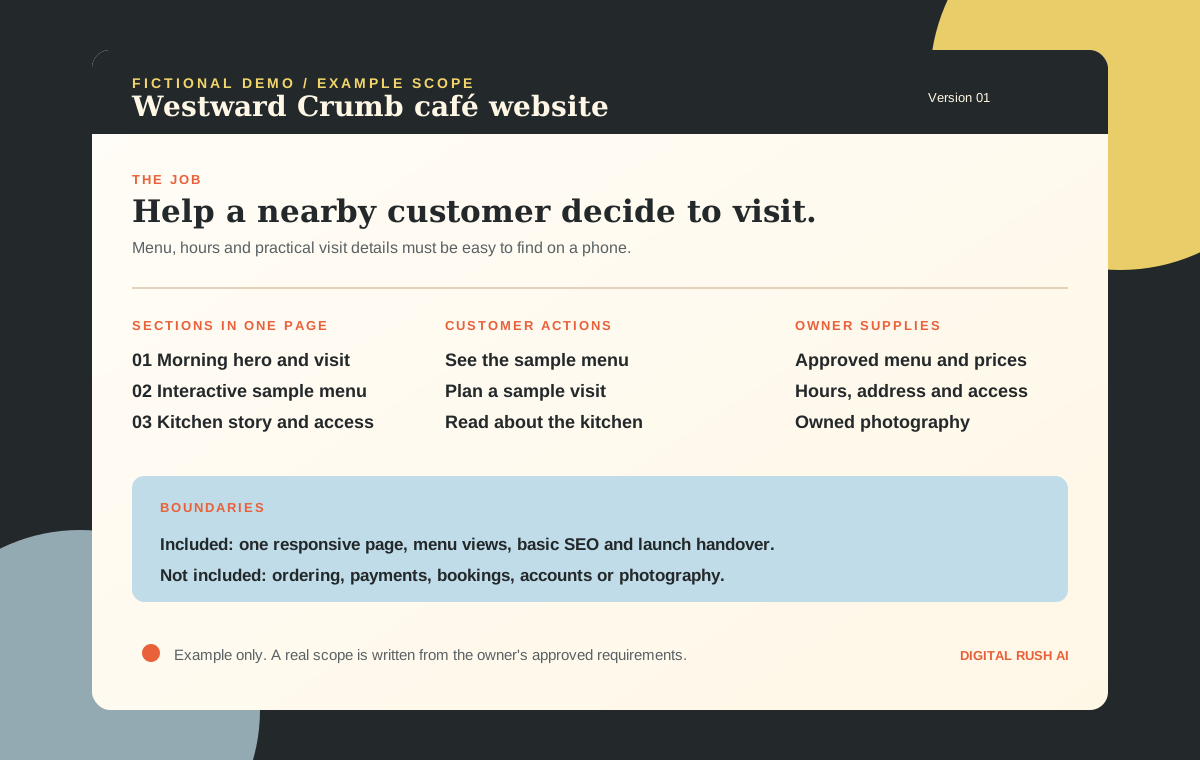
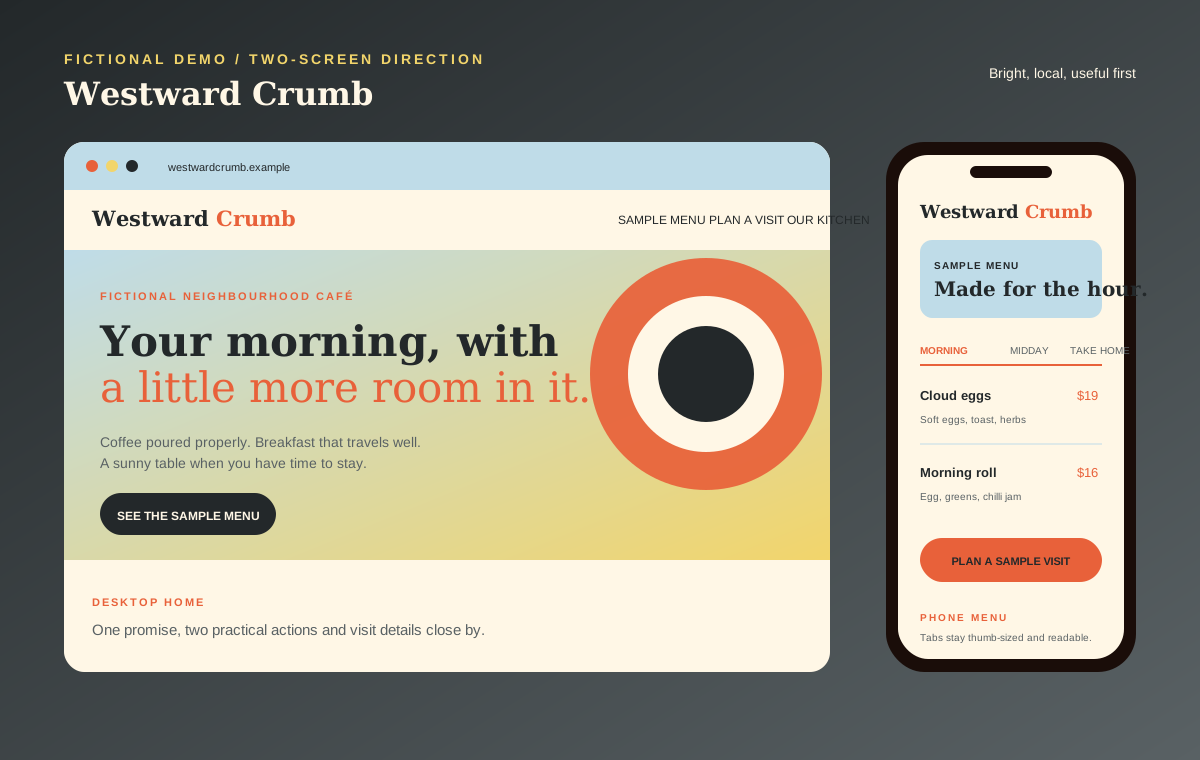
Fictional demonstration only. A real project uses the business owner's approved material and requirements.
Who this suits
A focused fit,
or a better alternative.
Worth a conversation when
- one job repeats often enough to matter;
- the team can show how it works today;
- one person can decide the rules and exceptions;
- you can describe what a useful result would look like.
Another route may fit better when
- the request starts with a feature list only;
- no one owns the job or its decisions;
- the people doing the work cannot show what happens;
- the job needs a large multi-team programme rather than one focused workflow.
Is this you?
Where does the work
start slipping?
Choose the pattern closest to your business. The diagram shows what needs to become visible before software is worth discussing.
01
Enquiries arrive, but ownership is unclear
ASK YOURSELFCan you see who owns every new enquiry and the next action without opening three tools?
- One capture point
- A visible owner
- A dated next action
This is a conversation aid, not an automated assessment or a savings promise.
Founder-led in Perth
Work directly with the person building it.
Karan scopes the job, builds the agreed solution, tests it and stays accountable through handover. You do not have to repeat the same context to a chain of account managers and delivery teams.
Questions before enquiry
Clear answers
before a call.
01What workflows are suitable?+
A good candidate is one repeated job with a clear owner and a result the team can recognise. That might be quote follow-up, booking admin, approvals or record updates. Show me the real rules and exceptions and I will tell you whether it fits.
02Do I need to know exactly what should be built?+
No. Bring the job that keeps repeating and show me how it works now. The fit call is for deciding whether the problem is clear enough to fix, not testing whether you can write a software brief.
03Can Digital Rush AI work with our existing tools?+
Possibly. I review your current inboxes, spreadsheets, CRM, calendar and handoffs before suggesting a replacement. I only include a connection after its access and limits are checked.
04What happens when a process needs human approval?+
I make that approval a clear stop with a named owner, the information needed to decide and a visible next action.
05How are exceptions handled?+
They should stop safely, explain what needs attention and go to a person who can act. I define that recovery before implementation starts.
06Is this an off-the-shelf product?+
No. I build around one specific business job. If an existing product or a smaller change is the better answer, I will recommend that instead.
07How does a project start?+
Start with the free fit call or use the detailed form if writing is easier. Nothing is agreed on that call. Any discovery or build gets its own written scope, responsibilities and price.
08What should I bring to the fit call?+
Bring one repeated job, the person who owns it, the tools it moves through and one or two examples of where it slows down. Do not send passwords or sensitive customer data.
09What happens after the call?+
I will tell you whether the job is ready for a useful next step. That may be no build, a smaller process change, further discovery or a written proposal.
10Can I describe the workflow before booking?+
Yes. Use the detailed form below the calendar to explain the job, timing and business context before you choose a next step.
11What does it cost?+
The fit call is free. Most first builds I would take on sit between $5,000 and $15,000; smaller automations can be less. You get the real number in the written scope.
Book a free fit call
Bring one repeated job.
We'll see if it fits.
You do not need a specification. Bring the person who owns the process, the tools it moves through and an example of where it waits or breaks.
Prefer to write it down first?AVAILABLE TIMES
Choose a time to talk about the repeated job.
Pick a time that suits you. You will add your contact details in Cal.com.
Open the booking page directly ↗Available times load when this section enters view.
Or describe it in writing
Describe the job
before you book.
Nothing is agreed by sending this. I read it and reply with the clearest next step.
- What does it cost? The first call is free; a first build is usually $5,000 to $15,000.
- Need a specification? No. Bring the job.
- What if it is not worth building? Karan will say so.